

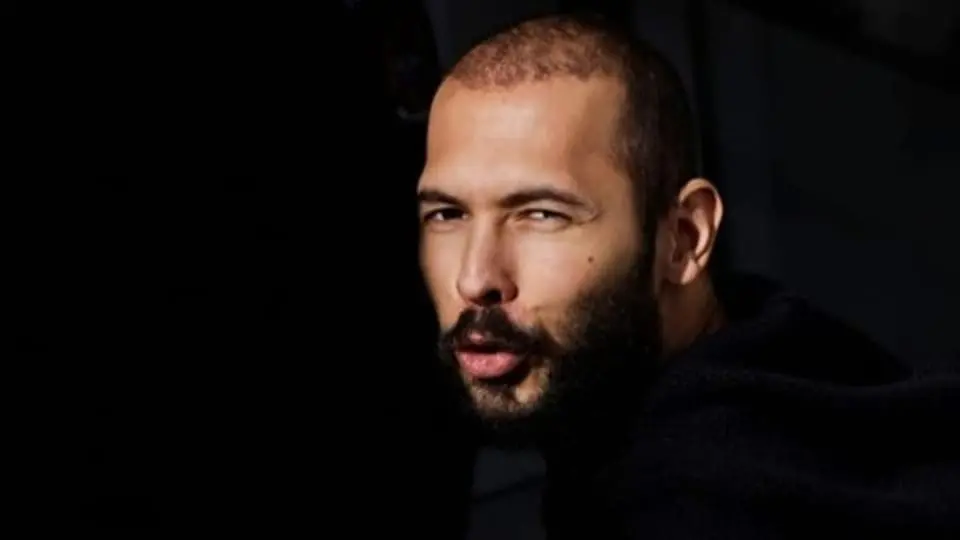
Andrew Tate, a name that sparks both admiration and outrage, has become a polarizing figure in the digital age. Known for his flashy lifestyle filled with fast cars, cigars, and provocative, often misogynistic statements, Tate commands a massive online following, particularly among young men. While many are repelled by his views, others are inexplicably drawn to his bravado and ‘success’ narrative. The situation has become so pronounced in some countries, including the United Kingdom, that schools have launched coordinated campaigns to counter his influence. In Switzerland, however, the response is more measured, with educators observing a nuanced reaction among students.
Who Is Andrew Tate?
Andrew Tate, 36, rose to fame as a professional kickboxer before transitioning into an online personality known for promoting a hyper-masculine, alpha male lifestyle. Born in the United Kingdom and raised in the United States and several European countries, Tate cultivated a persona built on luxury, dominance, and unashamed chauvinism. He gained significant traction on platforms like TikTok, Instagram, and YouTube, where his clips gained millions of views. Despite being banned from many social media networks for violating hate speech policies, his content continues to circulate widely through replicators and fan accounts.
In December 2022, Tate and his brother Tristan were arrested in Romania on charges of human trafficking and forming an organized criminal group, accused of luring women into relationships and coercing them into forced labor and pornography. As of early 2023, they remain in pre-trial detention with no formal indictment. The legal proceedings have not diminished his popularity; in fact, some followers view his arrest as proof of a systemic attack on successful men.
Why Are Young Men Attracted to Andrew Tate?
Teacher Daniel Gebauer, with two decades of experience teaching secondary classes in the Swiss canton of Bern, conducted an informal survey in his classroom. “When I asked who had heard of Andrew Tate, more than half the students raised their hands immediately,” he says. “Among the boys, almost all knew him.” Knowledge, however, does not equate to endorsement. Most students are aware of the controversy — the allegations of misogyny, homophobia, and racism — and they generally condemn those aspects. Yet a certain fascination persists.
“What seems to impress the boys is his absolute confidence,” Gebauer explains. “He says what he thinks without trying to please anyone. That kind of coolness, even if it’s off-putting, holds a certain appeal.” This observation aligns with broader research on the psychology of radicalization and male identity crises. Young men today navigate a complex landscape of shifting gender roles, heightened expectations, and conflicting messages. The old model of masculinity — the stoic provider — has been largely dismantled, yet a new inclusive ideal has not fully solidified. Into this vacuum steps Andrew Tate, offering simple, assertive answers to feelings of confusion and disenfranchisement.
The Swiss School Perspective: Not Yet a Crisis
Unlike the UK, where school networks have proactively developed materials to combat Tate’s influence, Switzerland’s largest teacher association (LCH) has no current plans for similar campaigns. A spokesperson told us that they would only intervene if the influencer’s impact became a tangible problem in classrooms. However, individual teachers are already noticing its reach. Gebauer states that his pupils can differentiate between fact and opinion. “They know he is controversial. They know the public opinion. But still, half of the class had heard of him. That says something about his viral presence.”
Swiss educators tend to adopt a preventive, analytical approach rather than straightforward censorship. They engage students in discussions about media literacy, gender roles, and the economics of influencer culture. This method aims to equip teenagers with the tools to deconstruct such figures without resorting to outright bans, which often make the forbidden more alluring.
The Allure of the Forbidden
Andrew Tate’s popularity in 2022 ranked him among the top Google searches globally. A significant part of his appeal lies in his status as an ‘outsider’ — someone who dares to voice what polite society deems unacceptable. His current legal troubles only amplify this narrative. “He is a symptom,” says Gebauer. “His success shows in a drastic way the tension young men experience. They are trying to find their path between old understandings and new expectations. The forbidden or socially condemned naturally has its appeal.”
This appeal is not random; it exploits deep-seated psychological and cultural currents. Many young men feel that society constantly lectures them about what they can and cannot say, do, or feel. Tate presents an alternative: a return to a world where men are dominant, women are submissive, and success is measured by wealth, status, and sexual conquest. This crude but compelling vision resonates with those who feel their traditional privileges are under threat.
Background and Career
Born in Washington, D.C., to a British father and a Romanian mother, Tate spent part of his childhood in the UK and later attended college in the United States. He began kickboxing in his teens, winning multiple world championships. In 2016, he gained notoriety after a short stint on the UK reality show “Big Brother,” from which he was removed after a video emerged showing him hitting a woman with a belt (Tate claimed it was consensual BDSM). He then pivoted to digital entrepreneurship, offering paid courses on wealth, seduction, and mindset through his website and social media.
His most famous product, ‘Hustlers University’ (later renamed ‘The Real World’), promises to teach followers how to make money and achieve their goals. Critics have described it as a pyramid scheme that preys on vulnerable young men. Despite investigations and bans, Tate continues to earn substantial income through membership fees and merchandise.
Comparative Analysis: UK versus Swiss Responses
The UK’s proactive stance — distributing lesson plans and posters to schools — reflects a different regulatory and cultural environment. Several British teachers reported that students openly praised Tate and adopted his language (e.g., referring to women as “broads” or denigrating “low-value” people). The government-funded campaign encourages critical thinking but also explicitly highlights the harm of Tate’s ideology. In contrast, Swiss schools appear to rely more on the general curriculum’s ability to foster critical media consumption. “We need to make more effort to understand the youth, not immediately devalue what interests them,” Gebauer adds.
The difference might also be due to scale: the UK’s larger and more ethnically diverse population might experience higher exposure, while Switzerland’s decentralized educational system allows individual cantons to decide on interventions. Nonetheless, both approaches recognize that outright censorship is ineffective. As media scholar Dr. Helene Müller from the University of Zurich suggests, “Banning creators like Tate often turns them into martyrs. The better strategy is to dissect their arguments, show the logical fallacies, and address the underlying insecurities that make them attractive.”
Young Men in Search of Identity
The fascination with Andrew Tate is not merely about his words but about what he represents. In a time when gender norms are being redefined, many young men feel lost. They are told to be sensitive but also to be strong; to cry but not to be weak; to pursue success but not at the expense of others. Tate offers a clear, morally uncomplicated identity: be a ‘high value man’ who dominates, earns money, and never apologizes. This narrative provides a sense of belonging and purpose.
Educational psychologists point out that most teenagers who engage with such content do not automatically adopt extremist views. Instead, they use it as a form of contrarianism or rebellion against perceived political correctness. “Teens are naturally drawn to the transgressive,” says Gebauer. “Our job is not to scold them but to show them why certain ideas are harmful — for themselves and others.”
One 14-year-old student in Gebauer’s class, speaking under a pseudonym, admitted: “I don’t agree with everything Tate says. But I like that he doesn’t care if people hate him. He’s rich and he does what he wants. That’s cool.” This sentiment echoes across many classrooms globally: a desire for autonomy and a rejection of social constraints.
Media Strategy: How Tate Maintains Influence
Andrew Tate’s media presence is masterfully engineered. Short clips of him shouting motivational slogans, boasting about his wealth, or insulting critics are designed to be highly shareable. He exploits algorithmic biases by creating controversial content that drives engagement. Even after being banned from major platforms, his content survives through “reaction videos,” AI-generated voiceovers, and fan-run accounts. His brand is nearly impossible to eradicate because it thrives on viral mechanics.
Furthermore, his arrest generated a massive upsurge in interest. Searches for “Andrew Tate” skyrocketed in January 2023. Many who had never heard of him began to investigate, inadvertently growing his audience. The media’s constant focus on him, even in negative coverage, contributes to his fame.
Another layer is the use of coded language and dog whistles. Terms like “matrix,” “awakening,” and “enemy” are part of a niche vocabulary that signals group membership. This makes followers feel part of an exclusive club that understands truth while mainstream society remains brainwashed. This dynamic is similar to other cult-like followings.
Ideological Content and Gender Dynamics
At the core of Tate’s philosophy is a belief in biological determinism: men are inherently dominant, women are submissive and best suited for domestic roles. He derides feminism, calling it a “misandry” movement designed to oppress men. Such views, while extreme, tap into anxieties about female empowerment and competitive job markets. For some young men, seeing a wealthy, successful man openly reject political correctness is cathartic.
But the effects are not harmless. Reports have linked Tate’s rhetoric to increased incidents of sexist and homophobic bullying in some British and American schools. In one survey, 12% of UK teachers said they had heard students repeating Tate’s views. In response, organizations like the NSPCC have issued guidelines for parents and educators. Swiss schools, while less directly affected, are monitoring the situation.
Gebauer insists that most of his students see through Tate’s excesses. “They say, ‘That’s too much.’ But they also admit that his confidence is appealing. It’s a nuanced feeling. Our challenge is to help them build a positive self-image that doesn’t rely on degrading others.”
Historical Context: Echoes of Past Misogynist Figures
Andrew Tate is not the first public figure to earn fame from misogyny. In the 1990s, radio shock jocks like Howard Stern pushed boundaries with sexist humor. Online pickup artists like Roosh V and Mystery promoted similar ideologies of manipulation and dominance. However, the internet’s viral nature amplifies Tate’s reach to levels previously unimaginable. He is part of a broader ‘manosphere’ that includes men’s rights activists, incels, and passive aggressive misogynists.
What sets him apart is the mixture of self-help, entrepreneurship, and extreme rhetoric. He presents himself as a mentor guiding young men to financial and romantic success, all while denigrating women and progressive movements. His followers often claim he simply tells “uncomfortable truths.” But critics see it as a dangerous step back towards patriarchal and oppressive attitudes.
Comparative research shows that such figures often emerge during periods of rapid social change. As women gain more rights and economic independence, some men feel threatened. Tate monetizes that resentment. Switzerland, a country with high gender equality indices, still sees pockets of traditionalism that may explain why his message has some traction even there.
Educational Strategies: Beyond Banning
Teachers like Daniel Gebauer advocate for open classroom dialogues. Rather than condemning Tate outright, they ask students to analyze his arguments. For example, they might watch a clip and discuss logical fallacies, evaluate the evidence for his claims, and explore the real-world consequences of his advice. Critical media literacy helps students become resistant to manipulation.
“We should not lecture them, but give them the tools to judge for themselves,” Gebauer says. “They are smart enough to see contradictions — for instance, Tate preaches stoicism but lives a life of extreme luxury and emotional outbursts. They can deconstruct that.”
In addition, schools are exploring mentorship programs that provide positive male role models. Engaging with successful men who demonstrate emotional intelligence and respect for women can counteract Tate’s toxic version of masculinity. Co-curricular activities like sports, community service, and debate clubs offer alternative spaces for validation.
Parents also have a role. Experts recommend that families start conversations early about online content, values, and peer pressure. By establishing trust, parents can guide children toward healthier sources of self-esteem.
The Role of Social Media Platforms
Major platforms like TikTok, Instagram, and YouTube struggle to police hateful content while maintaining free expression. Tate’s suspensions show that these companies are willing to act, but the persistence of his content indicates systemic failures. Algorithms reward engagement, and controversial content generates high engagement. Until social media companies redesign their recommendation systems to prioritize valuable content over sensationalism, figures like Tate will continue to surface.
Some platforms have started labeling content that contains hateful rhetoric, but enforcement remains inconsistent. The European Union’s Digital Services Act could impose stricter regulations, but it may take years to implement effectively. In the meantime, educators and parents are the first line of defense.
No Conclusion
It is a complex landscape where the line between infamy and influence is blurred. Andrew Tate’s case underscores the urgent need for media literacy, empathetic education, and a redefinition of masculinity that embraces both strength and vulnerability. As one Swiss teacher put it, “We must be more patient in understanding what draws young people to these figures, and then offer better alternatives.”