
AI photo editing is moving past the polished selfie era. Over-filtered images and plastic-looking edits are fading fast as AI tools push creators toward something more emotional, cinematic, weird, and personal. From fake vintage camcorder clips to AI-generated movie posters and surreal toy versions of ourselves, photo editing this year has moved far beyond filters. What's changing isn't just the technology; it's the way people are using AI tools like ChatGPT, Meta AI, Alibaba's Qwen, Google Gemini, Adobe Firefly, and FLUX to tell stories rather than simply polish selfies. TikTok creators, Instagram influencers, Pinterest mood-board curators, and even small businesses are all leaning into a new era of AI-assisted aesthetics, where personality matters more than perfection. Here are the 8 biggest photo editing trends dominating 2026, why they exploded online, and prompts you can use to recreate them.
The beautifully imperfect film look
One of the biggest trends on social media right now is intentionally making photos look older, messier, and more emotional. Users are adding film scratches, grain, faded colors, accidental blur, and light leaks to fight back against the too-perfect AI aesthetic. This trend became especially popular among Gen Z creators who grew up surrounded by polished influencer photography and now crave something that feels real. The rise of authentic, lo-fi aesthetics online reflects a broader cultural shift toward vulnerability. AI tools now allow anyone to replicate the tactile feel of analog photography without needing a vintage camera. The effect is both nostalgic and deeply personal.
Where it's trending: Instagram, TikTok, Tumblr
Why people love it: It feels emotional and human.
Prompt to try: "Turn this photo into a faded late-90s disposable camera memory. Add dusty film grain, soft motion blur, uneven lighting, tiny scratches, and a warm sunset glow leaking from one corner. Make it feel accidental and nostalgic instead of polished."
AI action figures and Chibi avatars
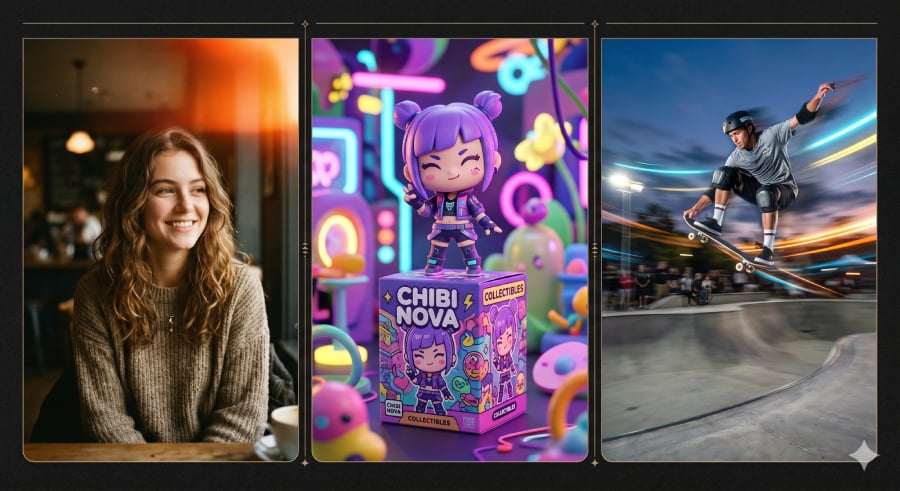
People are turning themselves into collectible toys faster than ever. The toyification trend has become one of the most shared AI photo styles of 2026, especially on TikTok and Pinterest. Some users prefer oversized anime-inspired Chibi figures, while others go for hyper-detailed action figure packaging complete with accessories and fake branding. It's playful, weirdly personal, and highly shareable. The underlying technology relies on consistent facial recognition and stylization algorithms that preserve identity while exaggerating proportions. Brands have also started using this trend for promotional campaigns, offering customers the chance to see themselves as limited-edition figurines.
Where it's trending: TikTok, Pinterest, Instagram Reels
Why people love it: Everyone gets to become the "main character."
Prompt to try: "Transform the subject into a stylized collectible toy with glossy plastic textures, exaggerated eyes, miniature accessories, and premium retail packaging. Add dramatic studio lighting and make it look like a limited-edition designer figure."
Cinematic time travel
AI photo tools are now doubling as time machines. Creators are placing themselves inside different decades and historical moments, from 1970s disco clubs to rainy Victorian streets and futuristic 2090 cyberpunk cities. Unlike older editing apps, today's AI tools automatically adapt clothing textures, lighting, shadows, and color grading to match the chosen era. This trend gained traction as generative AI improved its understanding of historical photography styles, lighting conditions, and architectural details. The result is highly immersive and often indistinguishable from period-accurate stock footage. Users frequently combine multiple time periods in a single series to tell stories about personal transformation or generational identity.
Where it's trending: Instagram, TikTok
Why people love it: It feels immersive instead of gimmicky.
Prompt to try: "Place this person inside a rainy Tokyo street in 1986 at night. Add glowing neon reflections, vintage shop signs, cinematic fog, and realistic lighting that naturally matches the environment."
Fake movie posters
Your selfie is now a Netflix thumbnail. AI-generated movie posters exploded after creators began transforming ordinary portraits into fake rom-coms, horror films, anime epics, and indie dramas. Many include cinematic typography, fake release dates, and dramatic taglines. Small creators are even using them as profile banners and event invitations. The trend taps into our collective love for cinematic storytelling and elevates personal photos to the level of Hollywood promotional materials. Advanced AI models now understand genre-specific color grading and composition rules, making each poster feel authentic. Some creators have built entire fictional universes by generating posters for imaginary sequels or series pilots featuring themselves as the lead.
Where it's trending: TikTok, Facebook, X
Why people love it: It makes everyday life feel cinematic.
Prompt to try: "Create a dramatic indie movie poster using this portrait. Add cinematic shadows, subtle film grain, elegant title typography, critic-style quotes, and a moody color grade inspired by modern A24 films."
Scrapbook collages and digital journals
Pinterest aesthetics are taking over AI editing. Instead of posting a single clean image, creators are layering photos with torn paper textures, handwritten notes, stickers, stamps, flowers, and doodles. The result feels like a physical diary page scanned into the internet. The style exploded among lifestyle creators and students documenting travel, fashion, and relationships. AI tools now offer template-based collage generation that adapts to the content of each image, automatically selecting complementary textures and positional layouts. This trend is particularly appealing because it reintroduces the imperfections of analog scrapbooking into a digital environment, creating a tactile experience that resonates with viewers seeking authenticity in a hyper-polished online world.
Where it's trending: Pinterest, Tumblr, Instagram
Why people love it: It feels personal and tactile.
Prompt to try: "Turn this image into a handmade scrapbook page with torn notebook edges, handwritten notes, tape pieces, coffee stains, faded magazine cutouts, and soft pastel textures."
Motion effects on still photos
Static photos are starting to look alive. This trend focuses on adding speed, blur, and cinematic movement to otherwise still images. Sports creators, fashion influencers, and musicians are heavily using it to create dramatic energy without shooting actual video. The effect uses advanced motion interpolation techniques that intelligently blur backgrounds while keeping the subject perfectly sharp. AI models can now detect the direction and intensity of movement suggested by the photo's composition (e.g., a car on a highway or a dancer mid-jump) and apply realistic streaks and camera shake. The result is a still image that conveys the same excitement as a video clip, making it perfect for social media feeds that prioritize visual impact.
Where it's trending: TikTok, sports pages, music/movie promos
Why people love it: Images suddenly feel cinematic and active.
Prompt to try: "Keep the subject perfectly sharp but add dramatic motion blur to the city lights and background. Include light streaks, subtle camera shake, and fast-moving energy like a scene from an action film."
Y2K camcorder revival
The early 2000s are back again. Camcorder overlays, timestamp graphics, CRT distortion, and low-resolution flash photography are everywhere in 2026. Creators are recreating the chaotic charm of old family videos and Myspace-era party photos. This trend mirrors the cyclical nature of nostalgia in digital culture, where each generation romanticizes the media aesthetics of their childhood. AI tools now offer dedicated camcorder filters that simulate the exact color shifts, scanlines, and compression artifacts of popular 2002-2005 consumer cameras. Some even allow users to apply a vignette that mimics the iconic Sony Handycam look. The imperfection of these edits actually makes them feel more authentic, as if they were captured before the era of high-definition perfection.
Where it's trending: TikTok, Instagram Stories
Why people love it: Nostalgia still wins online.
Prompt to try: "Edit this photo like it was captured on a cheap 2003 camcorder. Add timestamp overlays, flash overexposure, low-resolution grain, slight VHS distortion, and cool-toned indoor lighting."
Character consistency storytelling
AI tools are finally remembering faces correctly. One of the most important breakthroughs of 2026 is character consistency. Creators can now generate multiple scenes featuring the same person without their appearance randomly changing between images. That's opening the door for AI comics, mini story series, branded mascots, and visual storytelling campaigns. This development is powered by advanced identity preservation techniques that maintain consistent facial features, hairstyle, clothing, and proportions across different poses, lighting conditions, and backgrounds. It enables creators to produce coherent visual narratives that rival traditional comic strips or storyboards. YouTube creators use it for short animated episodes, marketers for consistent brand icons, and educators for illustrated lessons. The technology reduces the friction that previously made AI-generated stories look disjointed.
Where it's trending: YouTube creators, marketers, educators
Why people love it: AI storytelling finally feels coherent.
Prompt to try: "Generate four scenes featuring the exact same character with consistent clothing, hairstyle, facial features, and proportions. Show them in different emotional moments across a cinematic day."
The biggest shift in photo editing this year is that people are no longer editing photos like technicians. They're editing like storytellers. Technical perfection is no longer the goal. Because flawless, computer-generated graphics have become so easy to produce, human authenticity has become the ultimate premium asset. The creators dominating social feeds this year aren't the ones looking for the cleanest output; they are the ones using conversational tools to share an intimate, flawed, or deeply imaginative perspective with the world. And surprisingly, the most successful edits in 2026 aren't always the most perfect ones. They're the images that feel emotional, funny, nostalgic, or strangely human.
Source: eWEEK News