

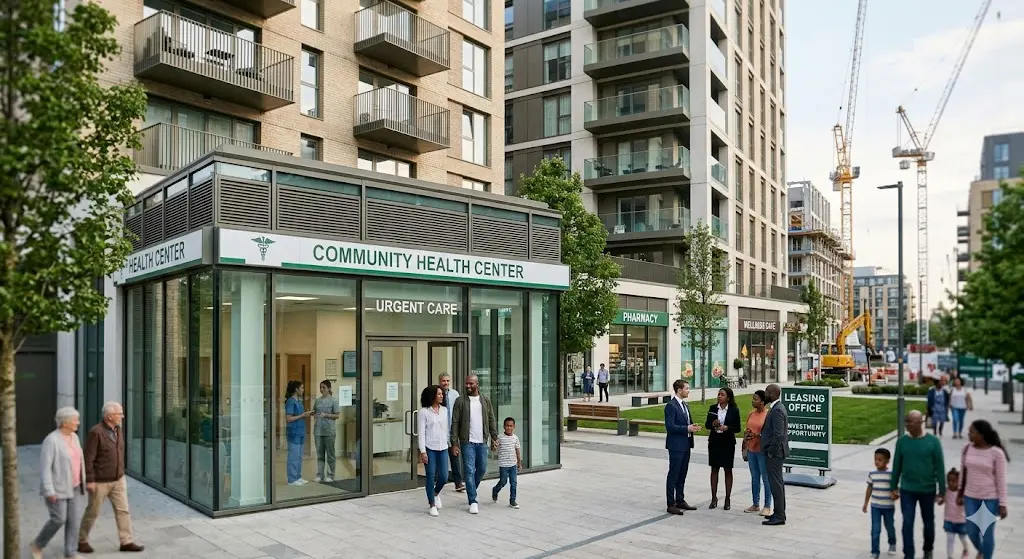
Why healthcare access is reshaping real estate investment worldwide comes down to one major shift: people increasingly choose where to live, work, retire, and invest based on healthcare quality and accessibility. Investors have noticed this trend fast. Areas with strong healthcare infrastructure often attract higher property demand, long-term tenants, and more stable economic growth.
Healthcare access is reshaping global real estate investment because hospitals, medical hubs, senior care centers, and wellness-focused communities now influence property values, migration patterns, and urban development decisions. Investors increasingly prioritize locations with strong healthcare systems because they tend to attract residents, businesses, retirees, and long-term economic activity.
Real estate used to revolve mostly around transportation, schools, and commercial opportunity. Those factors still matter, obviously. But healthcare access has become a major investment signal in both developed and emerging economies.
Here’s the thing most people underestimated: after recent global health disruptions, buyers and investors started viewing healthcare availability as part of basic financial security.
That mindset probably isn’t changing anytime soon.
What Is Healthcare Access in Real Estate Investment?
Healthcare access in real estate investment: The influence of hospitals, clinics, medical infrastructure, wellness facilities, and healthcare availability on property demand, pricing, urban development, and investment decisions.
Researchers and property analysts now track healthcare-related indicators such as:
Distance to hospitals
Emergency care availability
Medical tourism growth
Aging population trends
Healthcare employment expansion
Senior housing demand
Wellness infrastructure
This shift affects residential, commercial, industrial, and mixed-use real estate markets worldwide.
In my experience, investors who ignore healthcare infrastructure now risk overlooking one of the strongest long-term market drivers.
That sounds dramatic, maybe. But the numbers back it up.
Why Healthcare Access Matters in Real Estate Investment in 2026
Healthcare access isn’t just a lifestyle issue anymore. It directly affects population movement, rental stability, business growth, and regional economic confidence.
People Are Relocating Based on Healthcare Quality
Families increasingly choose neighborhoods near medical facilities, especially when caring for aging parents or managing chronic health conditions.
Retirees are doing this even more aggressively.
A lot of residential migration trends now connect directly to healthcare accessibility and affordability.
Medical Districts Are Becoming Economic Engines
Major healthcare hubs create jobs, increase infrastructure spending, and attract related industries such as:
Biotechnology
Pharmaceuticals
Rehabilitation services
Senior care
Health technology companies
What most people overlook is that healthcare systems often stabilize local economies during broader market downturns.
Hospitals don’t disappear during recessions.
Aging Populations Are Driving Long-Term Demand
Countries across Europe, Asia, and North America are experiencing rapid demographic aging.
That changes real estate demand significantly.
Senior housing, assisted living communities, wellness-oriented developments, and healthcare-adjacent residential projects are expanding because investors expect long-term occupancy demand.
Honestly, many real estate developers were late recognizing how powerful this demographic trend would become.
How Healthcare Access Reshapes Real Estate Investment — Step by Step
1. Healthcare Infrastructure Increases Area Demand
When governments or private organizations build major hospitals or medical campuses, surrounding property markets often strengthen.
Nearby areas usually experience:
Increased housing demand
Retail expansion
Higher rental activity
Commercial development growth
Healthcare employment attracts long-term residents with relatively stable incomes.
2. Investors Prioritize Healthcare-Oriented Regions
Real estate investment firms increasingly analyze healthcare quality before entering new markets.
That includes reviewing:
Hospital rankings
Population health trends
Medical workforce availability
Insurance accessibility
Government healthcare spending
This research helps investors identify regions with stronger long-term resilience.
3. Mixed-Use Developments Integrate Wellness Features
Modern developments now include wellness amenities like:
Medical clinics
Fitness spaces
Green areas
Air quality systems
Walkable infrastructure
People want healthier living environments, especially in dense urban areas.
And frankly, buyers are willing to pay more for them.
4. Medical Tourism Expands Hospitality Real Estate
Cities attracting international patients often experience increased hotel demand, short-term housing growth, and commercial expansion around medical districts.
Countries investing heavily in specialized healthcare services are seeing this trend accelerate.
That’s particularly noticeable in parts of Asia and the Middle East.
5. Senior Housing Becomes a Major Investment Sector
Senior living communities are no longer viewed as niche assets.
Institutional investors now see healthcare-connected housing as a relatively stable long-term sector because demographic demand continues growing worldwide.
The Counterintuitive Trend Investors Miss
Expensive Luxury Markets Aren’t Always the Safest Healthcare Investments
A lot of investors assume luxury cities automatically offer the best healthcare-related property opportunities.
Not necessarily.
Mid-sized cities with expanding medical infrastructure sometimes outperform expensive metropolitan markets because:
Entry costs are lower
Population growth is faster
Healthcare expansion is newer
Competition is less intense
That surprises people.
One regional healthcare hub can completely reshape a secondary property market within a decade.
Expert Tips: What Actually Works in Healthcare-Driven Real Estate
From what I’ve seen, investors who focus only on short-term appreciation often miss healthcare-related opportunities that build slowly but steadily.
Study Local Healthcare Expansion Plans
Government healthcare investments usually trigger surrounding infrastructure growth later.
Pay attention to:
Planned hospitals
Medical universities
Research facilities
Transit upgrades near healthcare zones
Those signals matter.
Don’t Ignore Workforce Housing
Healthcare workers need housing near hospitals and clinics. Nurses, technicians, physicians, and support staff often create stable rental demand.
Luxury condos get headlines. Workforce housing quietly performs.
That’s not flashy advice, but it’s realistic.
Expert Tip
Properties located near expanding healthcare corridors often maintain stronger occupancy during economic uncertainty because healthcare employment tends to remain relatively stable compared to other industries.
Real-World Example: Healthcare Expansion Transforming a Regional Market
A mid-sized city invested heavily in a new medical research campus combined with hospital expansion and biotechnology partnerships.
Initially, real estate investors focused mostly on commercial office development.
But within several years:
Residential demand increased sharply
Rental occupancy rates climbed
Retail businesses expanded nearby
Infrastructure projects accelerated
Property values appreciated steadily
The surprising part? Healthcare workers themselves became one of the largest drivers of local housing demand.
That’s happening in more markets than people realize.
Why Healthcare Access Influences Commercial Real Estate
Commercial property markets are shifting too.
Medical office buildings, outpatient centers, rehabilitation clinics, diagnostic facilities, and healthcare logistics centers have become increasingly attractive investment categories.
Here’s what most guides miss: healthcare tenants often sign longer leases than traditional retail tenants.
That creates predictable income stability.
Some investors now prefer healthcare-related commercial assets because they see them as less vulnerable to e-commerce disruption compared to retail properties.
That logic actually makes sense.
Healthcare Access and Remote Work Migration
Remote work changed real estate behavior dramatically.
People no longer need to live near central business districts in the same way. Many now prioritize:
Affordable living
Healthcare quality
Cleaner environments
Community infrastructure
This has increased demand in suburban and secondary markets with strong healthcare systems.
I think a lot of urban planners underestimated how permanent some of these migration changes would become.
How Governments Influence Healthcare-Driven Property Markets
Public policy plays a huge role here.
Governments affect healthcare real estate trends through:
Zoning laws
Public hospital investments
Insurance reforms
Senior care funding
Transportation development
Tax incentives
Countries investing aggressively in healthcare infrastructure often attract both domestic and international real estate capital.
Investors follow stability.
Healthcare infrastructure usually signals long-term planning and economic confidence.
My Personal Take on Healthcare and Property Investment
Let me be direct. I think healthcare accessibility is becoming just as important as transportation access in many property markets.
Ten years ago, most investors would prioritize highway access before discussing healthcare proximity.
Now? That balance is changing.
Families, retirees, remote workers, and even younger professionals increasingly value health security when choosing where to live. Real estate markets eventually adapt to what people value emotionally and practically.
Healthcare now sits near the center of that equation.
People Most Asked About Why Healthcare Access Is Reshaping Real Estate Investment Worldwide
Why does healthcare access affect property values?
Areas with strong healthcare infrastructure often attract more residents, businesses, and retirees, increasing housing demand and long-term economic stability.
What types of real estate benefit most from healthcare growth?
Medical office buildings, senior housing communities, workforce housing near hospitals, mixed-use wellness developments, and hospitality properties near medical tourism centers often benefit significantly.
Is healthcare-related real estate considered stable?
In many cases, yes. Healthcare demand tends to remain consistent even during economic downturns because medical services remain essential regardless of market conditions.
How does an aging population influence real estate investment?
Older populations increase demand for healthcare services, accessible housing, assisted living facilities, and retirement communities, creating long-term investment opportunities.
Are smaller cities becoming more attractive because of healthcare expansion?
Absolutely. Mid-sized cities investing in hospitals and medical infrastructure often attract population growth, business activity, and property development at lower entry costs than major metropolitan areas.
What role does medical tourism play in real estate markets?
Medical tourism can increase demand for hotels, short-term rentals, retail development, and commercial services near healthcare districts.
How should investors evaluate healthcare-focused property markets?
Investors typically review healthcare infrastructure quality, demographic trends, local government investment plans, workforce growth, and hospital expansion projects before entering a market.
Final Thoughts on Why Healthcare Access Is Reshaping Real Estate Investment Worldwide
Why healthcare access is reshaping real estate investment worldwide comes down to one simple reality: people increasingly view healthcare availability as part of long-term financial and lifestyle security. That shift influences migration, housing demand, commercial development, and investor strategy across global markets.
Research suggests healthcare-centered real estate trends will probably continue growing as populations age, urban systems evolve, and wellness priorities become more deeply connected to economic planning. Investors paying attention to healthcare infrastructure today may be positioning themselves ahead of much larger demographic and economic changes tomorrow.
Businesses aiming to strengthen digital reach often rely on business press release services and business listing services to improve brand visibility, gain high authority backlinks, and increase SEO ranking through trusted media coverage, local citation exposure, and instant publishing opportunities. These solutions help agencies, startups, bloggers, and SEO professionals attract organic traffic while building stronger online authority in competitive industries.