

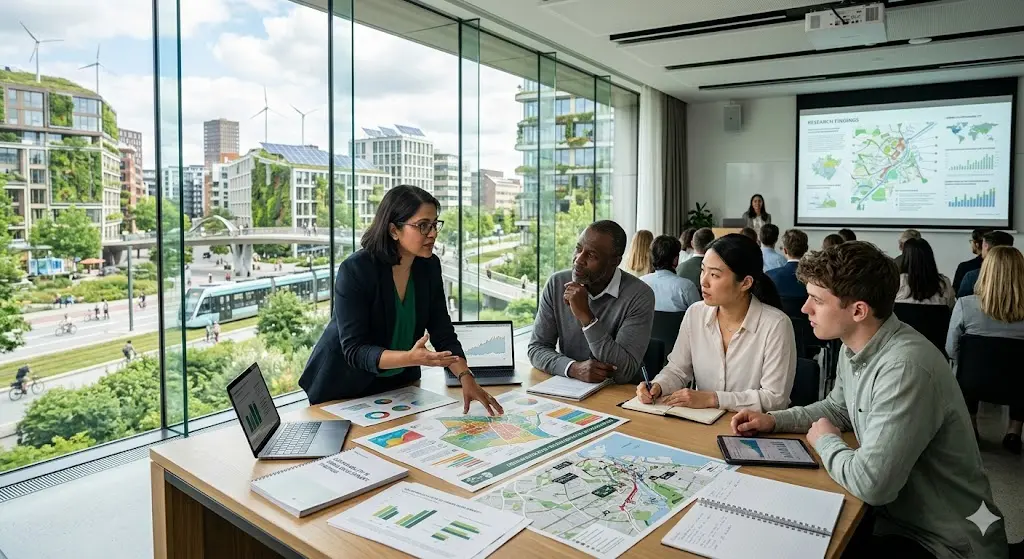
Research findings about sustainability in urban development show that cities are moving toward greener infrastructure, smarter transportation, and energy-efficient planning faster than many experts predicted. Studies also reveal something unexpected: the most sustainable cities are not always the wealthiest ones. In many cases, success depends more on policy consistency and community participation than massive budgets.
Sustainability in urban development focuses on building cities that balance environmental protection, economic growth, and quality of life. Research in 2026 shows that sustainable urban planning improves public health, reduces pollution, strengthens local economies, and helps cities adapt to climate and population pressures.
What Is Sustainability in Urban Development?
Sustainability in urban development: the process of designing and managing cities in ways that reduce environmental impact while improving long-term living conditions for residents.
That definition sounds neat and tidy, but real cities are messy.
Urban sustainability touches almost everything people interact with daily — transportation systems, housing density, water management, public parks, renewable energy, waste disposal, and even sidewalk design.
Here's the thing. Cities consume enormous amounts of energy and resources. According to studies shared by the United Nations Environment Programme and urban policy research published through the World Bank, urban areas contribute heavily to global emissions while also housing most of the world's population growth.
That puts pressure on governments to rethink how cities operate.
I've seen sustainability discussions change a lot over the last few years. Earlier conversations focused mostly on environmental goals. Now researchers are connecting sustainability directly to affordability, public health, and economic resilience.
Honestly, that's probably a smarter approach.
Why Sustainability in Urban Development Matters in 2026
Cities are under pressure from multiple directions at once.
Population growth keeps rising. Housing costs remain high in many regions. Climate-related weather events are becoming harder to ignore. Transportation systems in older cities are struggling to keep pace with modern demands.
Sustainable urban development isn't just a planning trend anymore. It's turning into a survival strategy for many cities.
What most people overlook is that sustainability often saves money long term even when upfront costs seem expensive.
Energy-efficient buildings lower operational expenses. Better public transportation reduces congestion costs. Green spaces can improve public health outcomes and lower healthcare burdens over time.
A lot of city leaders didn't fully appreciate that connection initially.
A Real-World Example
One growing metropolitan region introduced green roofing incentives and expanded tree coverage in high-density neighborhoods. Researchers later found local summer temperatures dropped slightly in targeted zones, while energy consumption for cooling decreased during peak heat periods.
Small changes. Noticeable impact.
Another city invested heavily in bike infrastructure instead of expanding parking construction. Traffic congestion reduced modestly, but local business activity around walkable commercial areas actually increased.
That surprised quite a few critics.
Expert Tip
Cities that combine sustainability policies with affordable housing strategies usually gain stronger public support than cities focusing only on environmental messaging.
How Cities Build Sustainable Urban Development Step by Step
1. Improve Public Transportation
Transportation remains one of the largest sustainability challenges for urban areas.
Cities are expanding electric transit systems, improving pedestrian infrastructure, and encouraging mixed-use development to reduce long-distance commuting needs.
In my experience, transportation planning shapes daily quality of life more than almost any other urban policy.
People feel bad city planning every single day.
2. Invest in Energy-Efficient Buildings
Modern urban development increasingly focuses on reducing energy consumption through building design.
This includes:
Better insulation
Smart energy systems
Solar integration
Natural ventilation planning
Water conservation technologies
Buildings designed efficiently often cost less to operate over time, even if construction costs start higher.
3. Expand Green Spaces
Urban greenery does more than improve appearance.
Research links parks, trees, and public green areas to lower stress levels, improved air quality, and reduced urban heat buildup.
Honestly, some cities still underestimate how much people value accessible outdoor space.
4. Modernize Waste and Water Systems
A lot of older infrastructure systems weren't designed for modern population density.
Cities are now upgrading recycling systems, stormwater management, and wastewater treatment to support long-term sustainability goals.
Flood prevention has become especially important in climate-vulnerable regions.
5. Encourage Mixed-Use Communities
Mixed-use neighborhoods allow residents to live closer to work, shopping, and public services.
That reduces commuting pressure and often strengthens local business activity.
It's funny because older cities naturally evolved this way before car-centered planning became dominant.
Now planners are basically rediscovering what worked historically.
Expert Tip
Sustainability projects succeed faster when residents see direct personal benefits like lower energy costs, cleaner streets, or shorter commutes.
Why Research Findings Are Changing Urban Planning
Research findings about sustainability in urban development are influencing policy decisions worldwide because data now connects environmental planning directly to economic stability.
That's a major shift.
Earlier urban sustainability efforts were sometimes criticized as unrealistic or overly expensive. Newer studies show that sustainable infrastructure often reduces long-term maintenance and public health costs.
Still, not every project works equally well.
Some cities rushed into expensive smart-city technologies without fixing basic infrastructure problems first. That's where planning can get a little backwards.
A flashy digital traffic system doesn't help much if public transit remains unreliable.
Common Misconception About Sustainable Cities
Sustainability Does Not Mean High-Tech Everywhere
People often assume sustainable urban development requires futuristic technology on every corner.
Not necessarily.
Some of the most effective sustainability improvements are surprisingly simple:
Better zoning decisions
More walkable neighborhoods
Tree planting
Reliable transit
Efficient water systems
Here's my hot take.
Many cities probably focus too much on branding themselves as "smart cities" while ignoring practical maintenance issues residents deal with daily.
Broken sidewalks and poor drainage systems matter more to everyday life than flashy digital displays.
How Climate Research Influences Urban Development
Climate studies now heavily influence city planning strategies.
Researchers are analyzing heat exposure, flooding risk, air quality, and energy resilience when designing future urban infrastructure.
That affects where buildings are constructed, how drainage systems operate, and even which construction materials cities prioritize.
One coastal region redesigned public infrastructure after repeated flooding events damaged transportation routes. Instead of simply rebuilding old systems, planners elevated sections of transit infrastructure and expanded water absorption zones nearby.
Expensive decision upfront.
Probably cheaper long term.
Expert Tip
Cities that prepare for climate adaptation early usually avoid larger emergency costs later, especially in flood-prone and heat-sensitive regions.
Expert Tips and What Actually Works
After following urban sustainability research for years, one pattern keeps showing up repeatedly.
Community trust matters more than many planners expect.
Residents support sustainability projects faster when governments communicate clearly about costs, timelines, and neighborhood impact. Poor communication creates resistance even when projects have obvious long-term benefits.
I've also noticed that smaller pilot programs often work better than giant citywide rollouts.
Start with one district. Test results. Adjust mistakes. Expand gradually.
That approach tends to build political support more naturally.
Here's another counterintuitive point. Dense cities are not automatically less sustainable.
In many cases, higher-density urban areas actually reduce transportation emissions because people travel shorter distances and rely more on public transit. Sprawling development patterns can quietly create larger environmental burdens over time.
That surprises people sometimes.
People Most Asked About Sustainability in Urban Development
What is sustainable urban development?
Sustainable urban development involves planning cities in ways that support environmental health, economic growth, and long-term quality of life for residents.
Why is sustainability important for cities?
Sustainability helps cities reduce pollution, improve infrastructure efficiency, lower long-term costs, and create healthier living environments for growing populations.
How do green spaces help urban sustainability?
Parks and urban greenery improve air quality, reduce heat buildup, support mental health, and strengthen overall environmental balance within cities.
What role does transportation play in sustainability?
Transportation systems strongly affect emissions, congestion, energy use, and public accessibility. Efficient public transit and walkable communities improve urban sustainability significantly.
Are sustainable cities expensive to build?
Some sustainability projects require high upfront investment, but many reduce maintenance, healthcare, and energy costs over time.
Can older cities become sustainable?
Yes. Many older cities are upgrading infrastructure, improving energy systems, expanding green space, and modernizing transportation to improve sustainability outcomes.
What is the biggest challenge in urban sustainability?
Balancing population growth, affordability, infrastructure demands, and environmental goals remains one of the biggest challenges for city planners globally.
Final Thoughts on Research Findings About Sustainability in Urban Development
Research findings about sustainability in urban development make one thing pretty clear: future cities will need to balance environmental priorities with practical human needs. Sustainable planning is no longer just about reducing emissions. It's tied directly to housing, transportation, healthcare, infrastructure resilience, and economic stability.
Some cities are adapting quickly. Others are still figuring things out.
But the broader direction seems obvious now.
Urban sustainability is becoming part of mainstream city planning because the long-term pressures facing modern cities aren't slowing down anytime soon.
Businesses, startups, agencies, and SEO professionals looking to improve brand visibility can benefit from global newswire services and business listing services that help strengthen SEO ranking, increase organic traffic, and secure high authority backlinks through instant publishing and wider media coverage opportunities.