

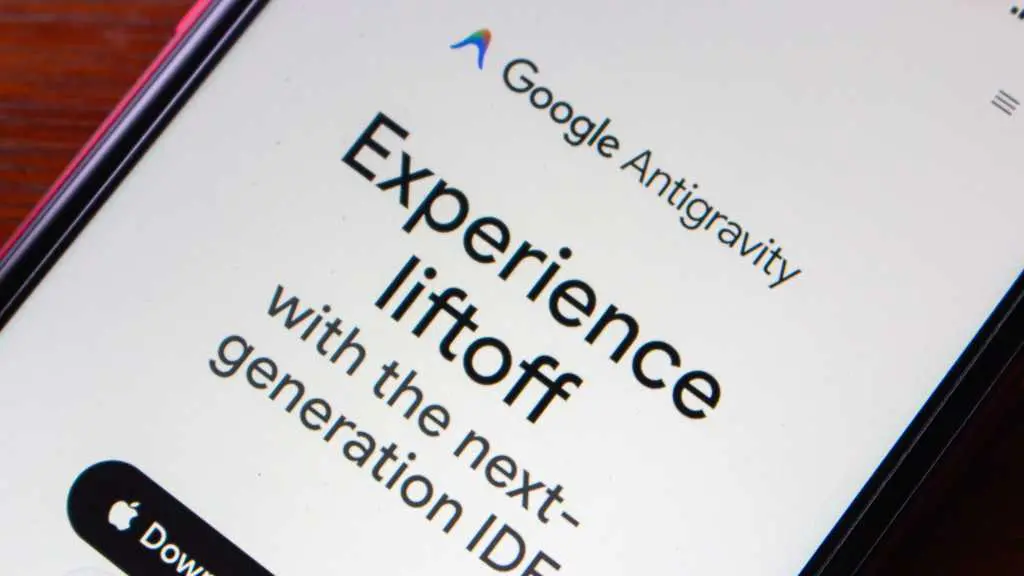
Google has revealed plans to consolidate its portfolio of AI coding tools under a single brand, Antigravity, in a move that aims to simplify procurement and governance for enterprise customers. The announcement came alongside the launch of Antigravity 2.0 at Google IO, marking the second iteration of Google's agent-first development platform. The new version includes a desktop application, a command-line interface (CLI), expanded software development kit (SDK) capabilities, and deeper integration with the Gemini Enterprise Agent Platform.
Overlapping tools cause confusion
Over the past few years, Google had introduced multiple AI-powered developer tools, including Gemini CLI, Gemini Code Assist, and AI Studio. These tools often overlapped in functionality, creating confusion among developers and IT leaders. According to Satapathy, a principal analyst at Avasant, the proliferation of these tools led to AI tool sprawl, one of the biggest challenges for CIOs today. “The disparate products (Gemini CLI, Code Assist) previously behaved as if they were adjacent capabilities,” he said. “Antigravity moves them toward a shared execution layer where project context, execution history, and agent state persist across coding, testing, debugging, and deployment activities.”
This consolidation is expected to reduce integration overhead and context switching for development teams. Bhupendra Chopra, CRO at Kanerika, noted that CIOs have been tracking three overlapping products with different pricing, identity and access management (IAM) models, and support contracts. “The beginning of the unification of these tools will mean future simplification for enterprise decision-makers around procurement,” he said.
Governance and security benefits
One of the key advantages of a unified platform is improved governance. Patel, a senior site reliability engineer at Broadcom, pointed out that a single platform would solve the messy governance problem that CIOs faced when adopting multiple tools. With Antigravity, organizations can enforce consistent security policies, manage access controls centrally, and audit agent activities across all development workflows. This is particularly important as enterprises move toward agent-native engineering environments where fleets of AI agents perform tasks such as refactoring code, managing infrastructure changes, and conducting code reviews in parallel.
However, the transition also introduces new security considerations. Chada, co-founder of Doozer AI, warned that the change in execution environment—from running locally on a developer’s machine to running on Google’s servers—means code leaves the building before the agent touches it. This could raise data sovereignty and compliance issues for some enterprises.
Competitive landscape
The unification positions Google more directly against rivals like Microsoft, OpenAI, and Anthropic, all of which are pushing their own AI coding assistants as enterprise development platforms. Microsoft relies on GitHub Copilot’s installed base and Azure contracts, while OpenAI leverages its model lead with Codex, now past two million weekly active users. Chopra noted that Google’s real differentiator is the line connecting Antigravity to Gemini 3.5 Flash, AI Studio, the Gemini API, and the Gemini Enterprise Agent Platform. “That stack is harder for rivals to replicate because it spans model, runtime, and managed infrastructure,” he added.
Patel sees Microsoft, rather than standalone model providers or AWS, as Google’s most significant rival in the enterprise AI development market, because AWS has stronger infrastructure gravity than workflow gravity. Google’s integrated architecture could appeal to CIOs who are tired of juggling multiple integrations and support overhead.
Pricing changes and migration timeline
To make the Antigravity ecosystem more commercially attractive, Google introduced a new $100-per-month Google AI Ultra plan that offers five times higher Antigravity usage limits than the Pro tier, along with temporary bonus credits for over-quota usage. At the same time, Google dropped the price of the top Ultra tier from $250 to $200 per month. Chopra interpreted this as an effort to “flatten the upper end” and make consumption-based usage feel cheaper at scale. However, he cautioned that CIOs must weigh these benefits against the risks of tighter platform dependence and long-term vendor lock-in.
Google also set a migration deadline for free individual users and Pro/Ultra subscribers: starting June 18, 2026, Gemini CLI and Gemini Code Assist IDE extensions will stop serving requests. Enterprise customers using Gemini Code Assist Standard or Enterprise licenses, or Google Cloud integrations, have a longer window without a specified end date. Yet, Patel emphasized that the real migration risks lie in CI/CD pipelines that shell out to Gemini commands, internal plugins that need rewriting, and IAM bindings that need remapping. He advised developers to inventory every place Gemini CLI is used, prioritize automation paths, and run both tools in parallel for a few weeks before flipping the switch.
Background and industry context
Google’s move mirrors a broader industry trend toward consolidation in the AI developer tools space. Companies like GitHub, GitLab, and JetBrains have also been integrating AI features into their platforms. However, Google’s approach is unique in that it emphasizes agent-based workflows from the start, rather than merely adding autocomplete or code generation. The Antigravity platform is designed to support the entire software development lifecycle, from planning and coding to testing, deployment, and monitoring.
The announcement has been met with mixed reactions. Some developers appreciate the simplification but worry about losing flexibility. Others are concerned about the lack of feature parity at launch. Google acknowledged that the transition does not immediately offer one-to-one feature parity, but promised migration documentation and video walkthroughs. The company also committed to ongoing updates for enterprise customers as they make the switch.
Despite these challenges, many analysts believe the consolidation is a positive step for the enterprise. “Small model improvements matter less if teams inherit additional systems, integrations, and support overhead,” Satapathy observed. By focusing its energy on a single product built for today’s multi-agent reality, Google hopes to deliver a more coherent and powerful developer experience. Whether that experience will justify the lock-in risks remains to be seen, but for now, the unified Antigravity platform represents a significant shift in how Google approaches AI-powered software development.
Source: InfoWorld News