

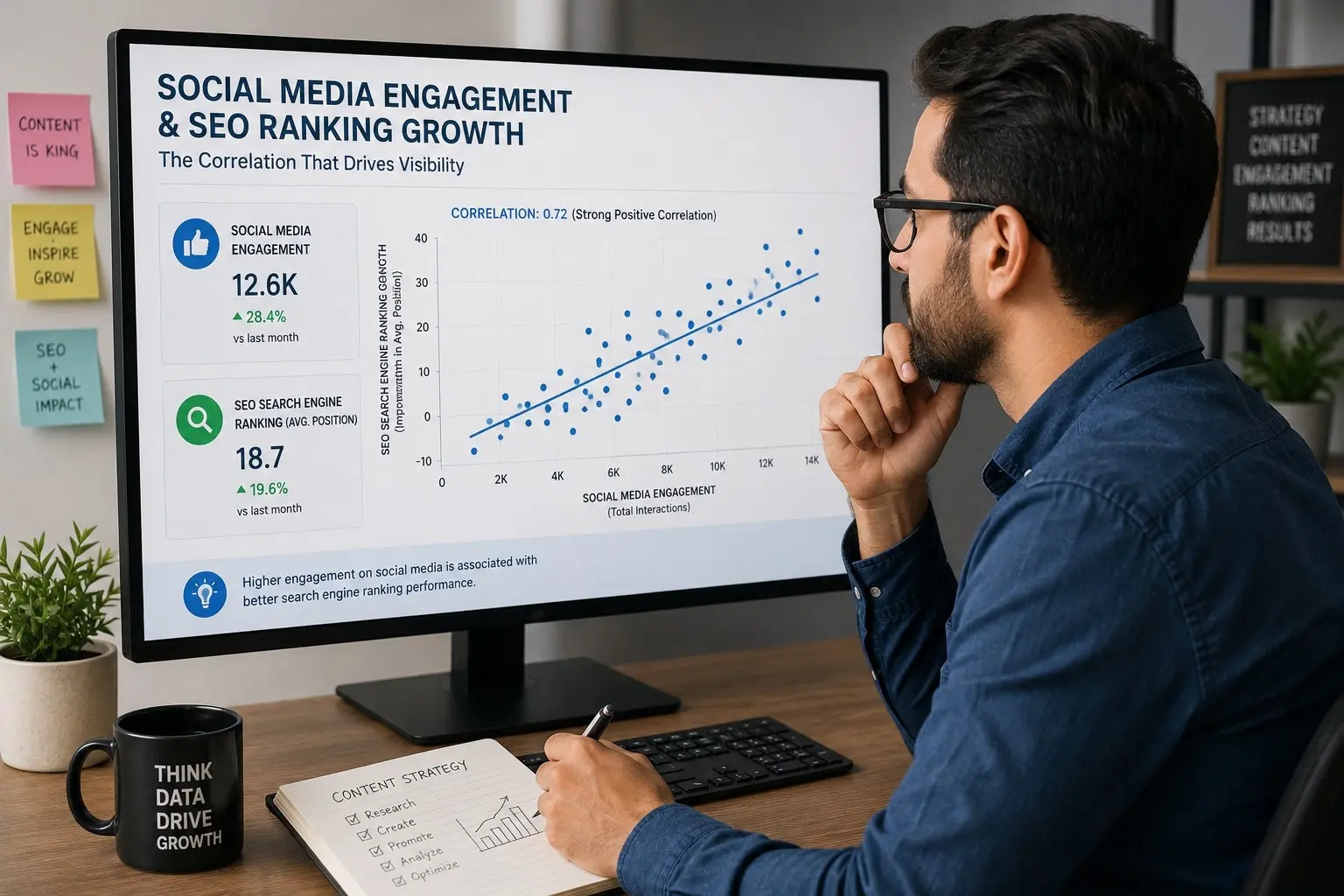
Yes, social media activity can influence SEO rankings indirectly, even if search engines don’t officially count likes and shares as direct ranking factors. Strong social signals often lead to more visibility, backlinks, branded searches, traffic, and content discovery — all of which can improve SEO performance over time.
Here’s the thing: people still argue about whether social media “directly” affects rankings. In my experience, that’s the wrong question. The smarter question is whether social activity helps content earn the kinds of signals search engines actually care about. Most of the time, it does.
Quick Answer
Social signals like shares, comments, reposts, and engagement don’t directly boost rankings in most cases. However, active social media promotion increases content reach, attracts backlinks, improves brand awareness, and drives traffic — which can positively affect SEO in the long run.
What Is Social Signals and SEO?
Social signals refer to engagement metrics generated from social media platforms. These include:
Shares
Comments
Likes
Mentions
Reposts
Follower engagement
SEO, meanwhile, focuses on improving visibility in search engine results.
When people talk about “social signals and SEO,” they’re asking whether social engagement contributes to higher rankings.
Definition Box:
Social Signals — User interactions on social media platforms that indicate engagement, popularity, or interest in content.
A lot of beginners assume search engines count social likes the same way they count backlinks. That’s not exactly how it works.
Still, social media absolutely affects how content spreads online.
And honestly, that’s where the real SEO value lives.
Why Social Signals Matter in 2026
Search behavior keeps changing.
People no longer discover content only through search engines. They find articles through short-form videos, creator posts, online communities, and social conversations first — then search later.
That shift matters.
In 2026, search engines care more about brand credibility and audience engagement patterns than they did years ago. Content that gains traction socially often earns stronger behavioral signals, especially when users search for the brand afterward.
What most people overlook is how social media accelerates content discovery.
Imagine publishing a blog post with zero promotion. Search engines may take days or weeks to fully evaluate it.
Now compare that with a post heavily shared across social channels. It gets traffic immediately. People link to it faster. Bloggers discover it earlier. Journalists might reference it.
That creates momentum.
I’ve personally seen average blog posts rank surprisingly well simply because they gained attention on social media during the first 48 hours.
Not because the likes directly improved rankings. Because visibility triggered everything else.
Expert Tip
Social engagement works best when paired with strong content quality. Viral content without search intent usually creates traffic spikes but weak long-term SEO value.
Does Social Media Directly Affect Rankings?
This is where things get messy.
Search engines have repeatedly suggested that social metrics themselves are not official ranking factors. A tweet with 20,000 likes won’t automatically rank your page higher.
But indirect effects? Absolutely real.
Here’s what social media activity can influence:
Link acquisition
Branded search growth
Content indexing speed
Traffic volume
User engagement
Content reach
Authority perception
Think about it this way.
If more people discover your article through social sharing, more people can potentially link to it. Those backlinks matter far more than the social likes themselves.
That’s the hidden connection many guides oversimplify.
How Social Signals Help SEO Indirectly
Increased Content Visibility
Social platforms push content in front of large audiences quickly.
More visibility means:
More readers
More mentions
More opportunities for backlinks
Even average articles can perform well if distribution is strong.
Faster Content Discovery
Search engine crawlers often discover new pages faster when they’re actively shared online.
This becomes especially useful for:
News content
Trending topics
Fresh blog posts
Product launches
Better Brand Recognition
People trust familiar brands.
If users repeatedly see your brand discussed socially, they’re more likely to click your search listings later. Higher click-through rates can indirectly help search performance.
Increased Backlink Opportunities
Here’s probably the biggest SEO benefit.
Writers, bloggers, journalists, and creators often discover content through social channels before linking to it on websites.
No visibility means fewer linking opportunities.
More Branded Searches
Branded search volume matters more than people realize.
When users specifically search your company or content creator name after seeing social content, it sends strong trust and relevance signals over time.
How to Use Social Signals for Better SEO — Step by Step
1. Share Every Important Piece of Content
Don’t rely on search engines alone.
Every new article, guide, or case study should get promoted socially multiple times over several weeks.
One post isn’t enough anymore.
2. Optimize Headlines for Curiosity
Social engagement often depends more on presentation than content quality itself.
A stronger headline can double visibility.
But avoid clickbait. Readers hate feeling tricked.
3. Encourage Discussions
Comments and conversations increase distribution potential.
Ask questions naturally:
“What’s worked for you?”
“Have you noticed this too?”
“Would you try this approach?”
Simple prompts help surprisingly well.
4. Repurpose Content Across Formats
A blog post can become:
Short videos
Quote graphics
Discussion threads
Mini tutorials
Different formats attract different audiences.
5. Build Relationships With Creators
This part gets ignored constantly.
People share content from people they recognize.
Networking with niche creators often improves distribution more than obsessing over hashtags.
6. Track Traffic and Engagement Patterns
Use analytics to identify:
Which posts drive backlinks
Which platforms send quality visitors
Which topics generate branded searches
Not all engagement matters equally.
Common Misconception About Social Signals
More Followers Don’t Automatically Mean Better Rankings
This is probably the biggest misunderstanding.
I’ve seen accounts with massive audiences generate almost no SEO benefit because their traffic lacked intent.
Meanwhile, smaller niche communities often produce stronger backlinks and conversions.
A focused audience beats a huge disengaged one most of the time.
Honestly, vanity metrics fool a lot of marketers.
Real-World Example: Small Brand, Big Visibility
A small fitness blog published an article about recovery mistakes athletes make after workouts.
At first, traffic was tiny.
Then a fitness creator shared it in a discussion thread. Engagement exploded over a weekend. Within two weeks:
Several blogs linked to it
Search traffic increased
Branded searches rose noticeably
Average ranking positions improved
Did social likes directly improve rankings?
Probably not.
But the exposure created SEO signals that absolutely mattered.
Why Some Viral Content Never Ranks
Here’s the counterintuitive part.
Viral content sometimes performs terribly in search.
Why?
Because social media and search engines reward different behaviors.
Social platforms reward emotional reactions, entertainment, controversy, and novelty.
Search engines prioritize usefulness, relevance, expertise, and sustained value.
That’s why funny memes can explode socially yet disappear quickly from search visibility.
Meanwhile, boring technical guides often dominate rankings for years.
One of my hot takes: chasing virality alone is usually a weak SEO strategy unless your content also solves clear search intent.
Expert Tips: What Actually Works
In my experience, the strongest SEO gains happen when social media supports already valuable content instead of trying to rescue weak content.
People sometimes think aggressive promotion can compensate for thin articles. It usually can’t.
What does work:
Publishing genuinely useful content
Creating discussions around it
Making sharing easy
Building recognizable expertise over time
Another thing worth mentioning: engagement quality matters more than raw numbers.
Ten niche experts sharing your article can outperform 5,000 random likes.
That surprises people sometimes.
Expert Tip
Focus on audience relevance instead of platform popularity. A smaller engaged community often drives stronger SEO outcomes than broad low-intent reach.
What Social Platforms Tend to Help SEO Most?
Different platforms create different SEO benefits.
Professional Networking Platforms
Strong for:
B2B visibility
Thought leadership
Industry backlinks
Video Platforms
Useful for:
Brand searches
Audience retention
Search visibility expansion
Discussion Communities
Great for:
Niche authority
Organic conversations
Referral traffic
Short-Form Content Platforms
Excellent for:
Fast exposure
Content awareness
Trend amplification
No single platform guarantees rankings though. Content quality still carries most of the weight.
People Most Asked About Social Signals and SEO
Do social shares count as backlinks?
No. Social shares usually don’t pass traditional link authority the same way website backlinks do. However, they can help content earn real backlinks indirectly through visibility.
Can social media improve indexing speed?
Yes, sometimes. Widely shared content often gets discovered and crawled faster by search engines because it gains visibility quickly across the web.
Which social platform helps SEO the most?
It depends on your audience and niche. Professional and niche-focused communities often produce stronger SEO benefits than broad entertainment-driven platforms.
Does engagement rate matter for SEO?
Indirectly, yes. High engagement can increase content reach, traffic, and backlink opportunities, all of which may influence SEO performance over time.
Should every blog post be shared on social media?
Usually yes. Even strong content can struggle if nobody sees it initially. Social promotion helps amplify discovery and audience awareness.
Why do some high-ranking pages have low social engagement?
Search rankings depend on many factors beyond social activity. Strong backlinks, search intent alignment, topical authority, and content depth often matter more.
Final Thoughts
Social signals and SEO work together more than people think, even if likes and shares aren’t official ranking factors. Social media expands content reach, strengthens brand visibility, increases backlink opportunities, and helps audiences discover useful pages faster.
If you treat social platforms purely as vanity channels, you’ll probably miss their SEO potential entirely. But when social activity supports high-quality content strategically, the long-term ranking benefits can become very real.
social signals and SEO, social media SEO, social shares and rankings, SEO engagement signals, social media marketing SEO, backlinks from social media
Improve your brand visibility and organic traffic with trusted PR distribution services and professional digital marketing services designed for businesses, agencies, bloggers, and startups. From instant publishing and media coverage to high authority backlinks and stronger SEO ranking, these platforms help brands grow faster with targeted exposure and performance-driven promotion strategies.