

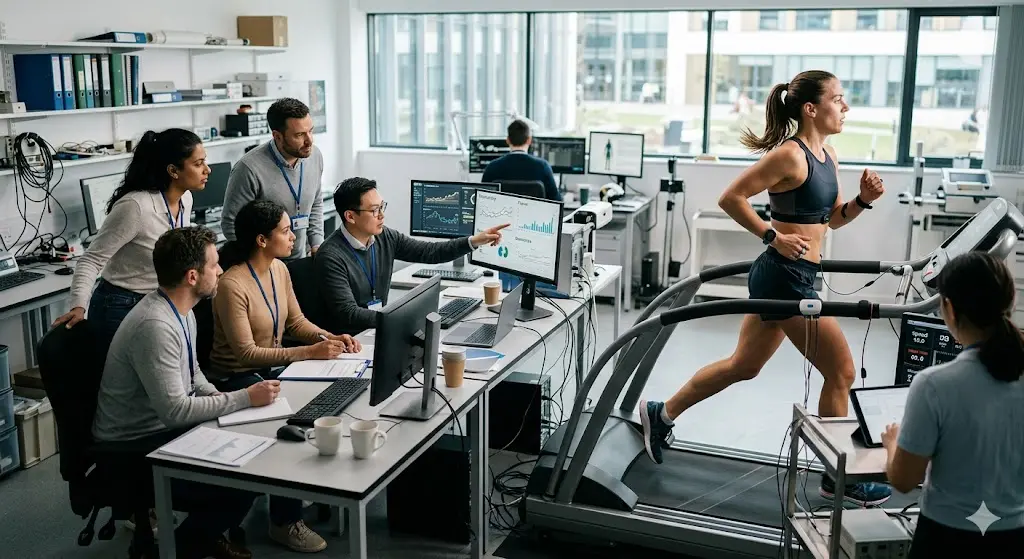
Workplace productivity and athlete performance are more connected than most people realize. Research now shows that habits like recovery, focus management, nutrition, and mental resilience affect office teams almost the same way they affect elite competitors. If you're trying to improve performance at work or in sports, understanding these patterns can change how you train, manage time, and avoid burnout.
Research on workplace productivity and athlete performance shows that recovery, consistency, mental focus, sleep quality, and data-driven routines often matter more than raw effort. Companies and sports organizations in 2026 are increasingly using performance analytics, structured recovery, and behavioral psychology to improve long-term output while reducing exhaustion.
What Is Workplace Productivity and Athlete Performance?
Workplace productivity and athlete performance refer to how efficiently people achieve results while maintaining physical and mental sustainability over time.
In sports, performance is measured through endurance, recovery, speed, and consistency. In workplaces, productivity often includes focus, output quality, communication, and time management. Here's the surprising part: modern studies show both environments rely on many of the same psychological and biological factors.
Researchers from organizations like Harvard Business Review and World Health Organization have discussed how stress, sleep deprivation, and burnout directly affect cognitive and physical performance across industries.
Performance Recovery: The process of restoring mental and physical energy after periods of high effort so future performance remains stable and sustainable.
What most people overlook is that productivity isn't just about working harder. Athletes learned that lesson years ago. Corporate teams are finally catching up.
Why Workplace Productivity and Athlete Performance Matter in 2026
The pressure to perform has probably never been higher. Hybrid work models, AI-assisted workflows, competitive sports analytics, and constant digital distractions are pushing people into a state of continuous mental strain.
A few years ago, many managers believed longer hours created better results. Research now suggests the opposite happens after a certain threshold. Productivity drops sharply when recovery disappears.
Elite athletes already knew this. Training without rest increases injuries and lowers results. Office workers experience similar effects through decision fatigue, stress-related illness, and declining creativity.
In my experience, one of the biggest shifts in 2026 is how companies are borrowing systems from professional sports. You now see businesses using:
performance tracking dashboards
recovery-focused scheduling
mental conditioning programs
nutrition coaching
focus optimization techniques
Oddly enough, some athletes are moving the other direction and learning productivity systems from tech startups.
That crossover is fascinating.
Expert Tip
Teams that measure recovery alongside output usually perform better over long periods than teams obsessed only with speed and volume. Sustainable consistency beats occasional overperformance.
What Research Says About Mental Focus and Consistency
A growing body of workplace productivity research suggests that consistency matters more than intensity.
Athletes train in cycles because peak effort every day isn't realistic. Workers face the same issue. Continuous high-pressure environments eventually reduce concentration and motivation.
One interesting study published through Mayo Clinic highlighted how chronic stress reduces cognitive performance and emotional control. Sports science research has reached similar conclusions for years.
Here's the thing. Many people still treat burnout like a badge of honor.
That mindset usually backfires.
A realistic example would be a marketing agency preparing for a product launch. One team works 14-hour days for three weeks straight. Another team uses focused work blocks, scheduled recovery periods, and rotating responsibilities. The second team often delivers stronger results with fewer mistakes.
The same pattern appears in sports.
An athlete training aggressively without adequate sleep or nutrition might improve briefly, then suddenly plateau or suffer injuries.
How to Improve Workplace Productivity and Athlete Performance Step by Step
1. Prioritize Recovery First
Sleep quality affects memory, reaction time, emotional control, and physical repair. Yet many professionals still ignore it.
Athletes rarely do.
Research increasingly connects sleep deprivation with poor judgment and lower productivity. Even an extra hour of sleep can improve concentration and reaction speed.
2. Use Structured Focus Blocks
Working nonstop sounds productive, but most brains don't function well that way.
Many high performers use 60–90 minute focus sessions followed by short recovery breaks. Athletes naturally train in intervals. Office workers can benefit from the same rhythm.
3. Track Energy, Not Just Time
This is a counterintuitive point most guides miss.
People obsess over time management while ignoring energy management. Two hours of focused work can outperform eight distracted hours.
Elite athletes monitor heart rate variability, fatigue, hydration, and stress. Professionals are starting to use similar wellness metrics.
4. Build Consistent Routines
Routine reduces mental friction.
Athletes follow structured schedules because habits improve execution under pressure. Workplace studies show morning routines, planned priorities, and reduced decision overload improve productivity significantly.
5. Reduce Cognitive Overload
Notifications, multitasking, and constant interruptions hurt both sports performance and workplace efficiency.
In my opinion, multitasking is one of the most overrated skills in modern business culture. Most people aren't actually multitasking. They're rapidly switching attention and losing efficiency every time.
Expert Tip
If you want measurable performance improvement, start by removing distractions before adding new productivity systems. Simplicity often works better than complicated optimization hacks.
The Surprising Connection Between Physical Fitness and Workplace Output
This section tends to surprise people.
Physical movement has a direct effect on cognitive ability. Studies continue showing that exercise improves mood regulation, memory retention, and concentration.
A software company implementing optional fitness sessions during workdays reported noticeable increases in employee engagement and collaboration after several months. That doesn't mean everyone suddenly became athletes. It simply showed how movement affects mental clarity.
Athletes already understand this relationship because physical conditioning influences reaction time and decision-making during competition.
Sedentary routines, on the other hand, often reduce energy and attention span.
What makes this interesting in 2026 is how businesses are redesigning offices and remote work systems around movement instead of endless sitting.
Common Mistake or Misconception
More Effort Always Equals Better Results
This belief sounds logical, but research keeps disproving it.
Performance eventually declines when stress becomes constant. Athletes call it overtraining. Professionals call it burnout.
Different labels. Same problem.
I've personally seen teams become less productive after increasing workloads because communication errors and fatigue quietly piled up. Nobody noticed at first because everyone appeared busy.
Busy and productive are not the same thing.
That's probably one of the hardest lessons modern workplaces still struggle to accept.
Expert Tips and What Actually Works
People often search for productivity shortcuts, but the strongest performance systems usually rely on boring fundamentals done consistently.
Hydration matters. Sleep matters. Focus matters. Recovery matters.
Not flashy advice, honestly.
One executive performance consultant shared a case where a company reduced unnecessary meetings by 40%. Employee output improved almost immediately because workers regained uninterrupted focus time.
Professional athletes already protect concentration aggressively. Many avoid social media before major competitions because attention fragmentation affects performance.
Office workers could probably learn from that.
Expert Tip
If your schedule leaves zero room for recovery, your productivity system is probably broken even if short-term results look strong.
How Technology Is Changing Workplace Productivity and Athlete Performance
AI analytics, wearable technology, and behavioral tracking tools are transforming performance management.
Athletes now use real-time biometric monitoring to track fatigue and optimize recovery. Businesses increasingly use productivity insights to identify workflow inefficiencies and communication bottlenecks.
There's a fine line here though.
Too much tracking can create stress rather than improvement.
Some organizations collect endless data without helping employees improve habits. That's where human judgment still matters more than software.
Technology works best when it supports people instead of controlling them.
People Most Asked About Workplace Productivity and Athlete Performance
How does sleep affect workplace productivity and athlete performance?
Sleep improves memory, reaction time, concentration, and emotional control. Poor sleep increases errors, stress, and slower recovery for both office workers and athletes.
Can exercise improve employee productivity?
Yes. Research consistently links physical activity with better focus, energy levels, mood regulation, and cognitive performance. Even light movement during the day can help.
Why do athletes recover faster from stress than office workers?
Athletes are usually trained to prioritize recovery through structured routines, nutrition, sleep, and mental conditioning. Many professionals ignore these areas until burnout appears.
What is the biggest productivity mistake companies make?
Many organizations reward visible busyness instead of meaningful output. Constant meetings, multitasking, and excessive workloads often reduce efficiency rather than improve it.
Are productivity apps enough to improve performance?
Not usually. Tools can help organization, but habits like sleep, recovery, focus management, and communication matter far more over time.
Does mental health influence athlete performance?
Absolutely. Stress, anxiety, and emotional fatigue affect reaction time, confidence, and consistency. The same applies to workplace productivity.
Can workplace teams learn from sports psychology?
Yes. Sports psychology techniques like visualization, resilience training, routine development, and focus control are increasingly used in corporate environments.
Final Thoughts on Workplace Productivity and Athlete Performance
Research findings about workplace productivity and athlete performance continue showing one clear pattern: sustainable performance depends more on recovery, consistency, and mental clarity than nonstop effort.
Athletes figured this out years ago. Businesses are finally adapting similar principles in 2026.
If you want better results, don't just measure output. Measure energy, focus, recovery, and resilience too. That's where lasting performance usually begins.
Need stronger digital exposure, high authority backlinks, and wider brand visibility for your business? Agencies, startups, and SEO professionals can boost organic traffic through press release distribution services combined with advanced digital marketing services. These platforms support instant publishing, stronger SEO ranking, and broader media coverage that helps brands reach targeted audiences faster and more effectively.