

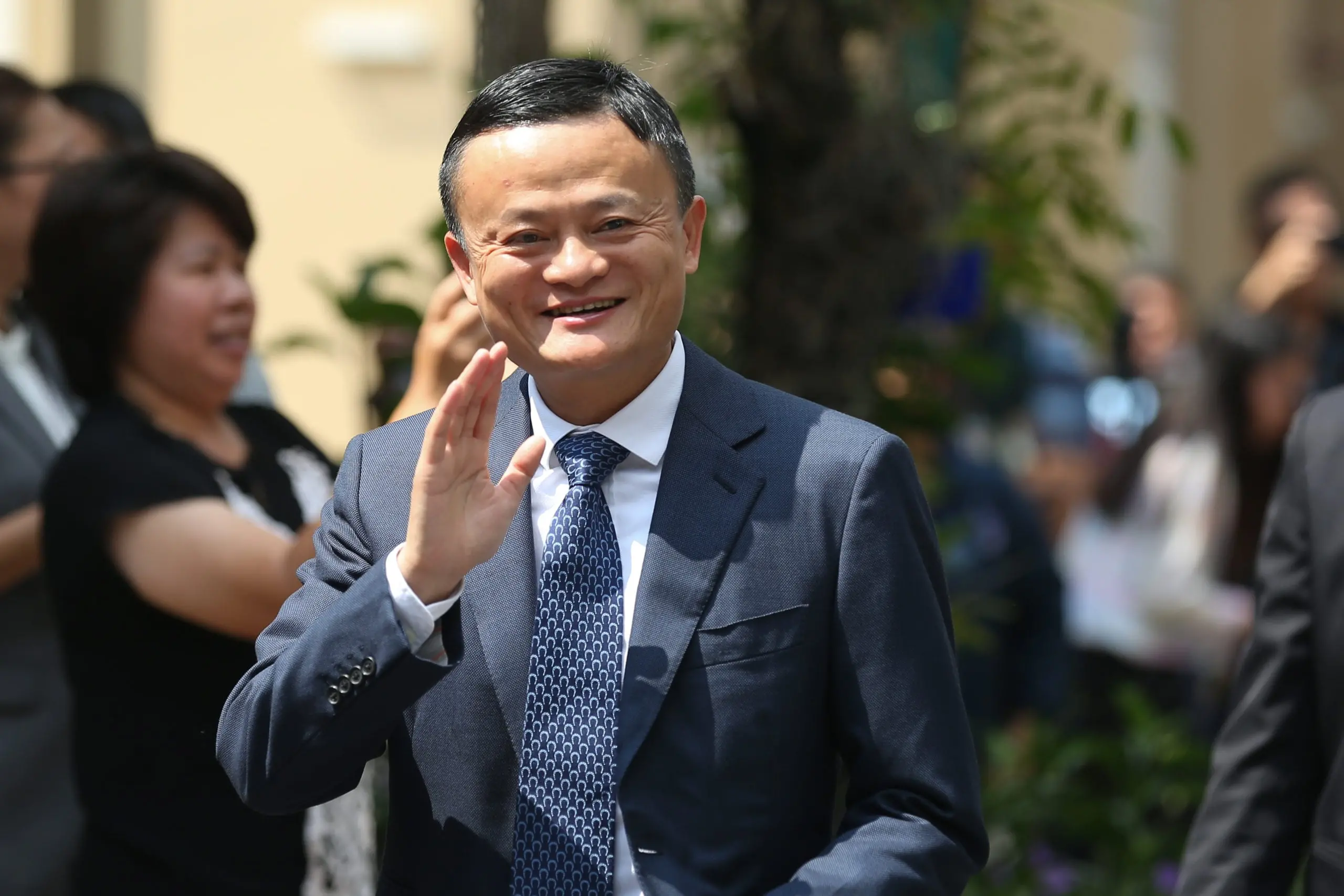
Jack Ma, the billionaire founder of e-commerce giant Alibaba, has largely disappeared from public view since a controversial speech in October 2020 that angered China’s leadership. Long considered the face of Chinese entrepreneurship, Ma was once praised as a visionary who transformed the country’s digital economy. But after his criticism of China’s financial regulatory system, he faced a massive government crackdown that not only hit Alibaba but also sent shockwaves through the entire tech sector. According to the Financial Times, Ma has been residing in Tokyo, Japan, since mid-2022, living a reclusive life far away from the limelight.
Born in 1964 in Hangzhou, China, Ma was an English teacher before he ventured into the internet business. In 1999, he founded Alibaba in his apartment with a small team, aiming to connect Chinese manufacturers with global buyers. The company grew rapidly and went public on the New York Stock Exchange in 2014 in one of the largest IPOs in history. At its peak, Alibaba dominated China’s e-commerce, cloud computing, and digital payments through its affiliate Ant Group. Ma himself became a symbol of China’s tech boom, often rubbing shoulders with world leaders and celebrities. His charisma and unconventional ideas made him a household name both inside and outside China.
The Speech That Changed Everything
On October 24, 2020, Ma gave a fiery speech at the Bund Summit in Shanghai, sharply criticizing China’s financial regulatory system. He argued that regulators were stifling innovation and compared state-owned banks to “pawnshops.” The speech was seen as a direct challenge to the Communist Party’s control over finance. Within days, the government responded with a sweeping crackdown. The planned IPO of Ant Group, Alibaba’s fintech affiliate—which would have been the largest in history—was abruptly halted. Regulators launched antitrust investigations into Alibaba, fined the company billions of dollars, and forced it to restructure its business. Ma himself vanished from public view for months, fueling rumors that he had been detained or forced into silence.
Ma’s disappearance marked the beginning of a broader regulatory assault on China’s tech giants. Companies like Tencent, Didi Chuxing, and Meituan also came under scrutiny over monopolistic practices, data security, and user privacy. The government introduced new rules to curb the power of these platforms, and the sector lost hundreds of billions of dollars in market value. For Ma personally, the fallout was severe. His net worth, estimated at $61 billion in October 2020, plunged to around $30.7 billion by late 2022, according to the Bloomberg Billionaires Index. Alibaba’s stock price fell more than 75% from its peak, eroding the fortune of its founder and other early investors.
Life in Tokyo: Private Clubs and Ski Resorts
After months of speculation about his whereabouts, the Financial Times reported that Ma had been living in Tokyo for about six months as of November 2022. Sources said he stays in a quiet residential area and socializes mainly in members-only private clubs. He is known to enjoy hot springs and ski resorts, often taking trips to the Japanese Alps. The reclusive billionaire also travels frequently to the United States and Israel, according to the report. In July 2022, he was spotted at Wageningen University in the Netherlands, where he visited to learn about agricultural technology—a sign of his ongoing interest in fields beyond e-commerce.
Japan’s strict pandemic border controls, similar to China’s, may have made it an attractive refuge for Ma. While China continued to enforce rigid COVID-zero policies—sparking widespread protests in November 2022—Japan gradually loosened restrictions. Ma’s low-profile lifestyle in Tokyo starkly contrasts with his former celebrity status. Once known for his flamboyant appearances, such as dressing up as a rock star at Alibaba events, he now avoids public attention. The shift reflects not only Ma’s personal caution but also the broader crackdown on prominent Chinese billionaires.
The 'Common Prosperity' Campaign and Its Impact on the Rich
Ma’s downfall coincided with the Chinese Communist Party’s push for “common prosperity,” a campaign aimed at reducing income inequality. Under this initiative, wealthy individuals and corporations were pressured to donate to charity and support social welfare programs. The government also targeted tech platforms that were seen as exploiting small merchants or undermining state-controlled industries. For Ma, the message was clear: no individual, no matter how influential, could openly defy the party’s policies. The campaign led to a widespread perception that China’s super-rich were losing their power and influence.
Other billionaires faced similar scrutiny. Huateng Ma, the founder of Tencent, announced a $15.6 billion donation to social programs in 2021. Chinese real estate tycoons like Xu Jiayin of Evergrande saw their empires collapse under debt and regulation. The government’s stance on wealth accumulation and monopolistic behavior reshaped the business environment, forcing many entrepreneurs to retreat from public attention. Jack Ma’s case became a cautionary tale: even the most successful business leaders must align with the state’s goals.
The Jack Ma Foundation and Philanthropy
Despite his troubles, Ma continues to oversee the Jack Ma Foundation, which he established in 2014 to focus on education, environmental protection, and health. The foundation has been involved in projects like providing teacher training in rural China and supporting COVID-19 relief efforts. However, when Business Insider reached out to the foundation for comment on Ma’s whereabouts and activities, it did not respond. The foundation’s activities have likely been scrutinized by authorities as part of the broader regulation of charitable organizations set up by tycoons.
Ma’s current lifestyle in Tokyo may allow him to continue his philanthropic work away from the harsh spotlight of Chinese politics. He has reportedly maintained contacts with global thought leaders and academics, focusing on issues like food security and sustainable development. His visits to Wageningen University, a leading agricultural institute, suggest that he is exploring solutions to climate change and food shortages—issues that align with China’s own strategic priorities.
Alibaba After Ma: A Company Transformed
Alibaba has undergone significant changes since Ma’s departure. In 2019, Ma stepped down as executive chairman of Alibaba, handing over control to Daniel Zhang. During the 2020 crackdown, the company complied with all regulatory demands, including a $2.8 billion antitrust fine and a restructuring of its business to separate Ant Group. Alibaba has also faced increasing competition from younger rivals like Pinduoduo and Douyin (the Chinese version of TikTok). Under Zhang’s leadership, Alibaba has focused on cloud computing, international expansion, and cost-cutting measures to stabilize its business. Yet the legacy of Ma’s confrontational approach still lingers, and the company remains under close government watch.
The wider Chinese tech industry continues to struggle with regulatory uncertainties, but recent signs indicate a slight easing. In 2022, Beijing approved new game licenses for Tencent and NetEase, and Xi Jinping voiced support for the platform economy in a May 2022 Politburo meeting. However, the crackdown fundamentally changed the relationship between the state and the private sector, with entrepreneurs now more cautious about public statements and aggressive expansion. Jack Ma’s story is the most powerful illustration of that shift.
While Ma remains in Tokyo, his exact plans are unknown. He has not made any public appearances or statements since his 2020 speech. For now, the Alibaba founder seems content with a quiet life, far from the boardrooms and press conferences he once dominated. His absence leaves a void in China’s tech scene, but his influence—both as a cautionary example and as a pioneer—endures. Whether he will ever return to China or resume a more active role is a question that only time, and the Chinese government, can answer.
Source: Business Insider News